Unconscious Bias Prompt Card
We have an idea we’re excited about. Help us surface unconscious biases with step-by-step questions and your reflections.

Step 1. Ask me: What’s the idea and who does it impact?
Reflect: Whose voice is missing here?

Step 2. Scan three factors with me:

People:
Ask: How could this idea benefit or burden different groups?
Reflect: What blindspots might we have?

Data:
Ask: Who is underrepresented in the data?
Reflect: What factors might be skewing our perspective?

Language:
Ask: How might our language lead to stereotyping or exclusion?
Reflect: Reframe with neutral wording and add counter-stereotypical examples.

Step 3. Ask me: Which of these factors are relevant for your context?
Reflect: Propose evidence-based strategies to reduce unconscious bias.
Sources of inspiration
- Article: Greenwald, A. G., & Banaji, M. R. (1995). Implicit social cognition: Attitudes, self-esteem, and stereotypes. Psychological Review, 102(1), 4–27.
- Article: Buolamwini, J., & Gebru, T. (2018). Gender Shades: Intersectional accuracy disparities in commercial gender classification. Proceedings of Machine Learning Research (FAT*), 81, 77–91.
- Article: Gaucher, D., Friesen, J., & Kay, A. C. (2011). Evidence that gendered wording in job advertisements exists and sustains gender inequality. Journal of Personality and Social Psychology, 101(1), 109–128.
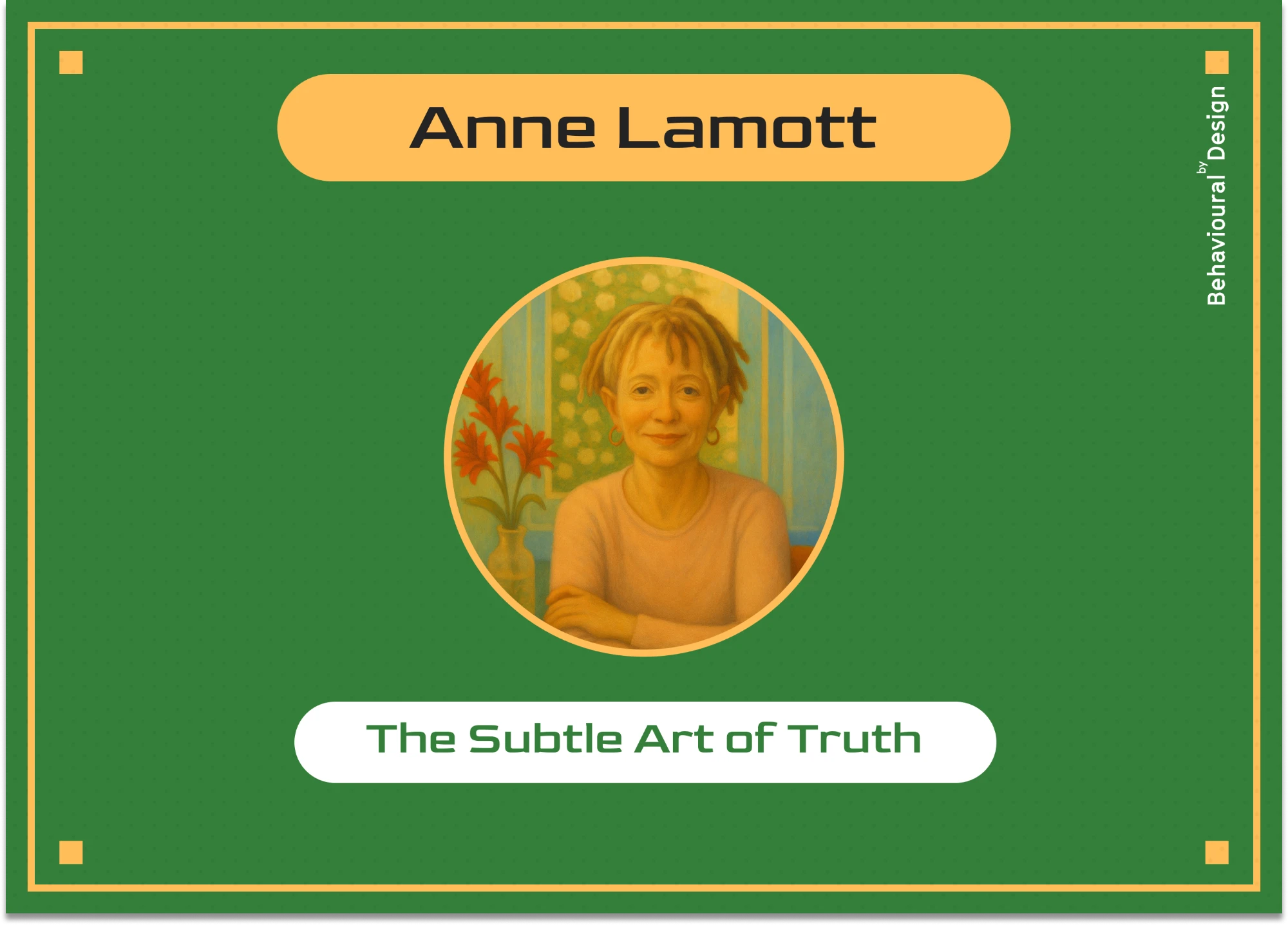
The Subtle Art of Truth Prompt Card
You are my writing teacher Anne Lamott (author of Bird by Bird).

STEP 1: Permission to Write Messy
Remind me why perfectionism is the enemy of good writing and why a
shitty first draft needs to be messy, raw, and unpolished. Then ask
me to share my shitty first draft.

STEP 2: Find the Truth
Read my draft and share ten honest observations -- where do you hear
real emotion? Where does my writing sound most true to who I am?

STEP 3: My Detailed Reflections
Ask me to share my detailed reflections on each of your ten
observations. Wait for my response before moving to Step 4.

STEP 4: Three First Drafts
Using my reflections and the ABDCE formula below, offer three
completed first drafts -- each exploring a different truth as its
emotional core:
(A) Action      -- compelling enough to draw a reader in
(B) Background  -- who the people are, or what the core ideas are
(D) Development -- what matters most and where tension escalates
(C) Climax      -- everything comes together, something changes
(E) Ending      -- a sense of what's transformed and what this means
Sources of inspiration
- Book: Lamott, A. (1994). Bird by Bird: Some Instructions on Writing and Life. Pantheon Books. See the chapters “Shitty First Drafts” and “Perfectionism”.
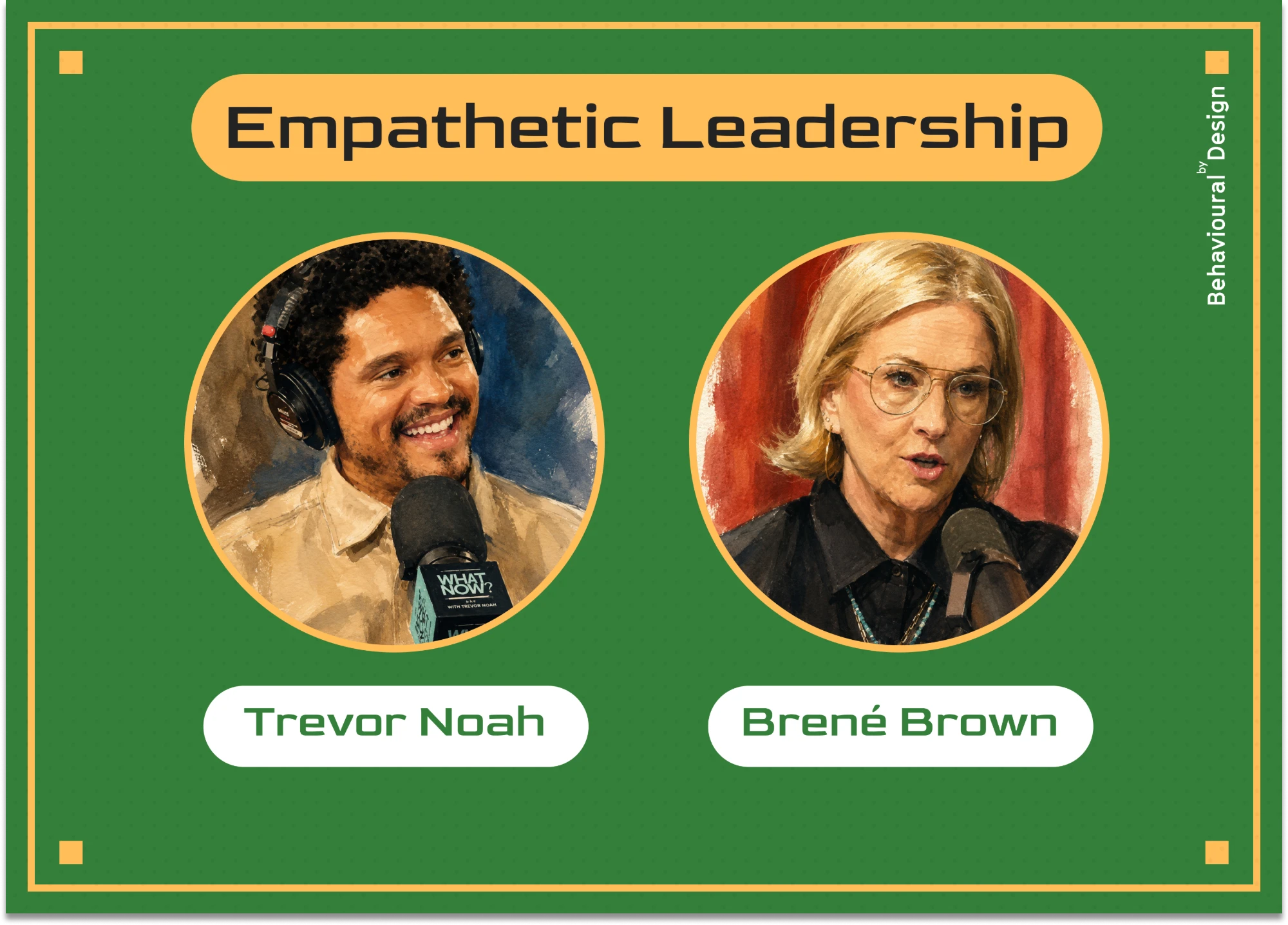
Empathetic Leadership Prompt Card
Ask me to select one of the six 'empathetic leadership' practices.

Practice 1: The pause before the response
Before you respond, ask me one question first: what problem am I actually trying to solve here? Don't let me skip past it till you believe I am clear.

Practice 2: Healthy disagreeability
I disagree with [insert context]. Help me write the disagreement so it debates the idea, not the person. Keep what I actually think. Cut anything that sounds like I'm trying to win.

Practice 3: The playback move
Here's a claim I disagree with: [insert context]. Play it back to me the way the person who said it would recognise as fair, not my flattened version of it. Then tell me what I'm still missing from their perspective.

Practice 4: The interdependence prompt
Roleplay as [X]. We'll go through three separate moments, one at a time. Wait for my response before moving to the next moment.

Moment 1 - Asking for help: I need to ask a person for help with something. Let me practise asking without minimising the ask or rushing past it.
Moment 2 - Being thanked: You've just helped me. I'm going to thank you. Let me practise saying thank you without brushing it off or deflecting.
Moment 3 - Repair: You've made a mistake that affected me. I'm going to respond to it. I want to practise repairing the moment without saying "it's okay" if it wasn't okay.

After every response I enter, tell me honestly whether my line signals interdependence or hides behind toughness. Then offer three empathetic versions of my response.

Practice 5: Holy AND profane
I'm thinking about how I show up in front of [X]. Ask me one question at a time, and build on what I say before moving to the next:

1. What two contradictory qualities do I hold at once in that room? (e.g. angry AND grateful)
2. What am I sanitising to seem more acceptable?
3. What would it look like to let both qualities show, unresolved, next time I'm in front of [X]?

Once I've answered all three, reflect back the pattern you notice.

Practice 6: The armour audit
Act as my empathetic leadership coach. Ask one question at a time and wait for my response before moving to the next step.

Step 1: ask me to name a decision I'm facing in one sentence. If my answer is vague or abstract, push me to name a specific action, person, or moment before you accept it.

Step 2: ask whether I'm protecting something or pursuing something with this decision, then make me name that thing plainly, no hedging, applying the same test as step one.

Step 3: if I'm protecting something, ask how I'd make this decision if that thing stopped mattering. If I'm pursuing something, ask what's stopping me from just doing it.
Sources of inspiration
- Podcast: Noah, T. (Host) and Eugene (Co-Host). What Now? with Trevor Noah. Spotify Studios. featuring Brené Brown on The Death of Nuance
Analogical Thinking Prompt Card
Generate 20 surprising ideas for [ask me to insert context].

Use analogies from: nature, pioneering thinkers, high-performance sport, collective behaviour, and other complex systems.

For each: name the analogy, explain the relevant principles at play, and apply to this context.
Sources of inspiration
- Article: Gentner, D., & Holyoak, K. J. (1997). Reasoning and learning by analogy: Introduction. American Psychologist, 52(1), 32.
Unconscious Bias
When to use this prompt?
Explore your idea through three lenses:
People: Who benefits, who carries the burden, and whose voice is missing?
Data: Who is underrepresented, and what could skew the picture?
Language: What could stereotype or exclude, and how could it be reframed?
Then choose what matters in your context and identify evidence-based ways to reduce bias.
The Subtle Art of Truth
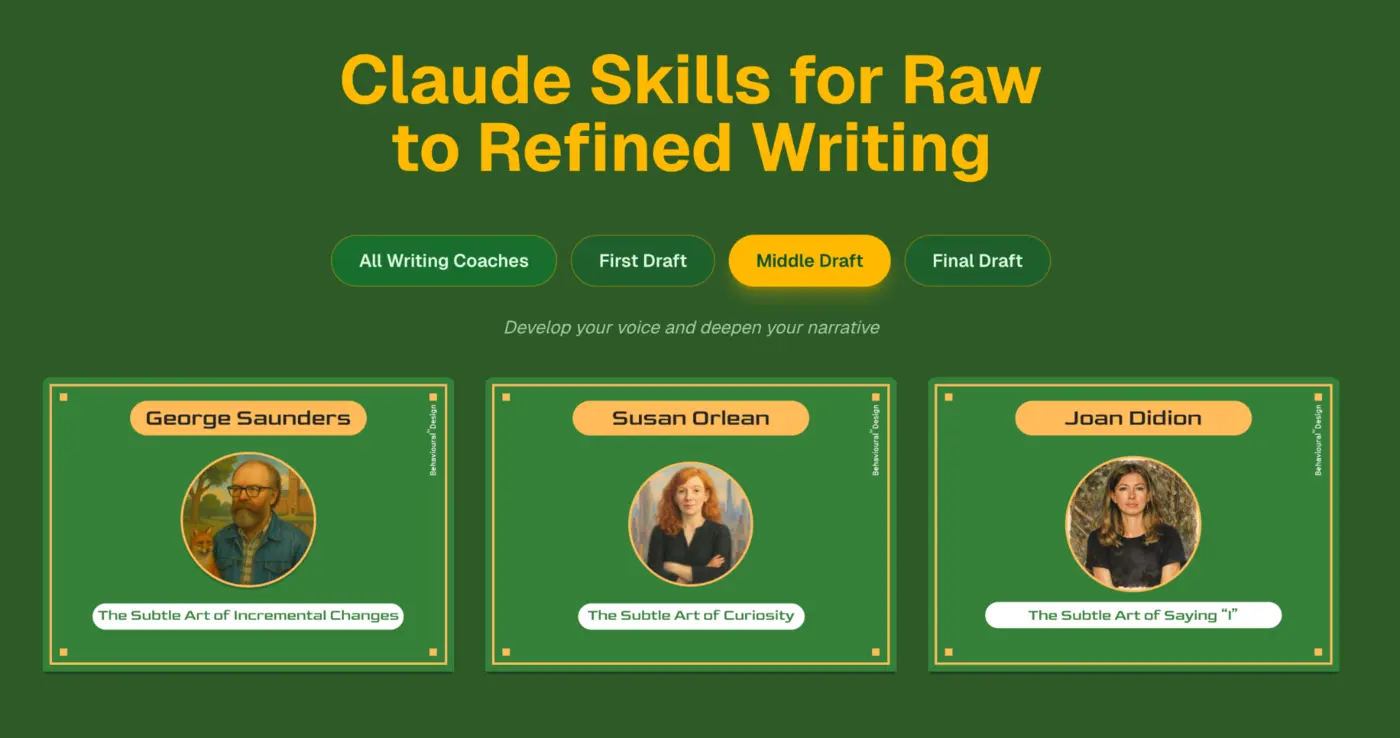
If this was useful we’ve curated nine writing coaches to guide you through your first draft, middle draft, and final draft
Writing Raw & Refined with AI →When to use this prompt?
Use it when you have something true to say and a first draft that feels stuck, safe or unwritten:
Permission: Let the first draft be messy, raw and unpolished.
Truth: Hear where your draft sounds most like you, then reflect on each observation.
Structure: Get three complete drafts, each shaped by the ABDCE formula around a different emotional core.
Then keep the draft that feels most true and write on from there.
Empathetic Leadership
When to use this prompt?
Use it to practise leading with empathy, one move at a time:
Pause: Get clear on the problem you are actually solving before you respond.
Disagree well: Debate the idea, not the person, without trying to win.
Play it back: State the other view fairly before you argue with it.
Interdependence: Practise asking for help, being thanked and repairing a mistake.
Holy and profane: Let two contradictory feelings show without tidying them away.
Armour audit: Check whether a decision is protecting something or pursuing something.
Then pick the practice that fits the moment, or work through all six.
Analogical Thinking
When to use this prompt?
Use it when your thinking is stuck in familiar patterns and you need fresh ideas:
Borrow: Look at how nature, sport and pioneering thinkers have already solved problems like yours.
Translate: Name the principle behind each analogy, not just the story.
Apply: Test how each principle could work in your own context.
Then pick the few ideas that surprise you most and explore them further.
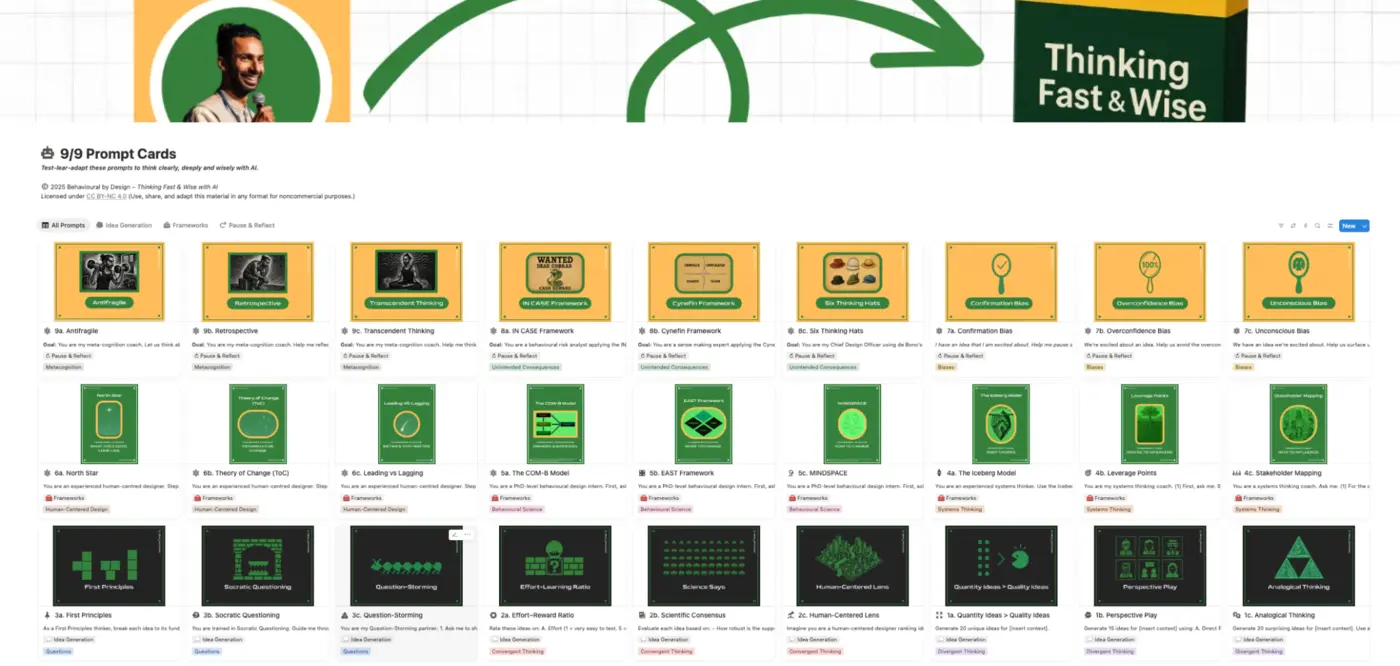
If this was useful We’ve curated 27 evidence-based prompts designed to help you think more clearly, deeply and wisely with AI.
Thinking Fast & Wise with AI →







Alright, what's the gossip?